How Ice bath and Cold Plunges are changing recovery in India
Ice baths are rapidly moving from elite sports science labs to mainstream gyms, physiotherapy clinics, and home routines in India, and they are reshaping how Indians think about recovery in a hot, humid country. Rather than being a western “trend”, cold-water immersion is starting to fit naturally into India’s climate realities, training culture, and urban lifestyle challenges.
Why recovery needs are different in India
India’s climate makes recovery more complex than in many cooler countries because high temperature is often combined with high humidity, especially in coastal and central zones. When humidity is high, sweat does not evaporate efficiently, so the body’s main cooling mechanism is compromised and heat stress builds up faster even at moderate temperatures.
For athletes, gym-goers, runners, and workers training or working outdoors, this means:
- Greater core temperature rise during sessions.
- Higher risk of cramps, heat exhaustion, and lingering fatigue after workouts.
In cities, nights are also getting hotter and staying warm for longer, which reduces the chance for the body to cool down properly and recover between training days. This climate pressure is the backdrop against which ice baths are becoming relevant, not just as a performance tool but as a response to chronic heat stress.
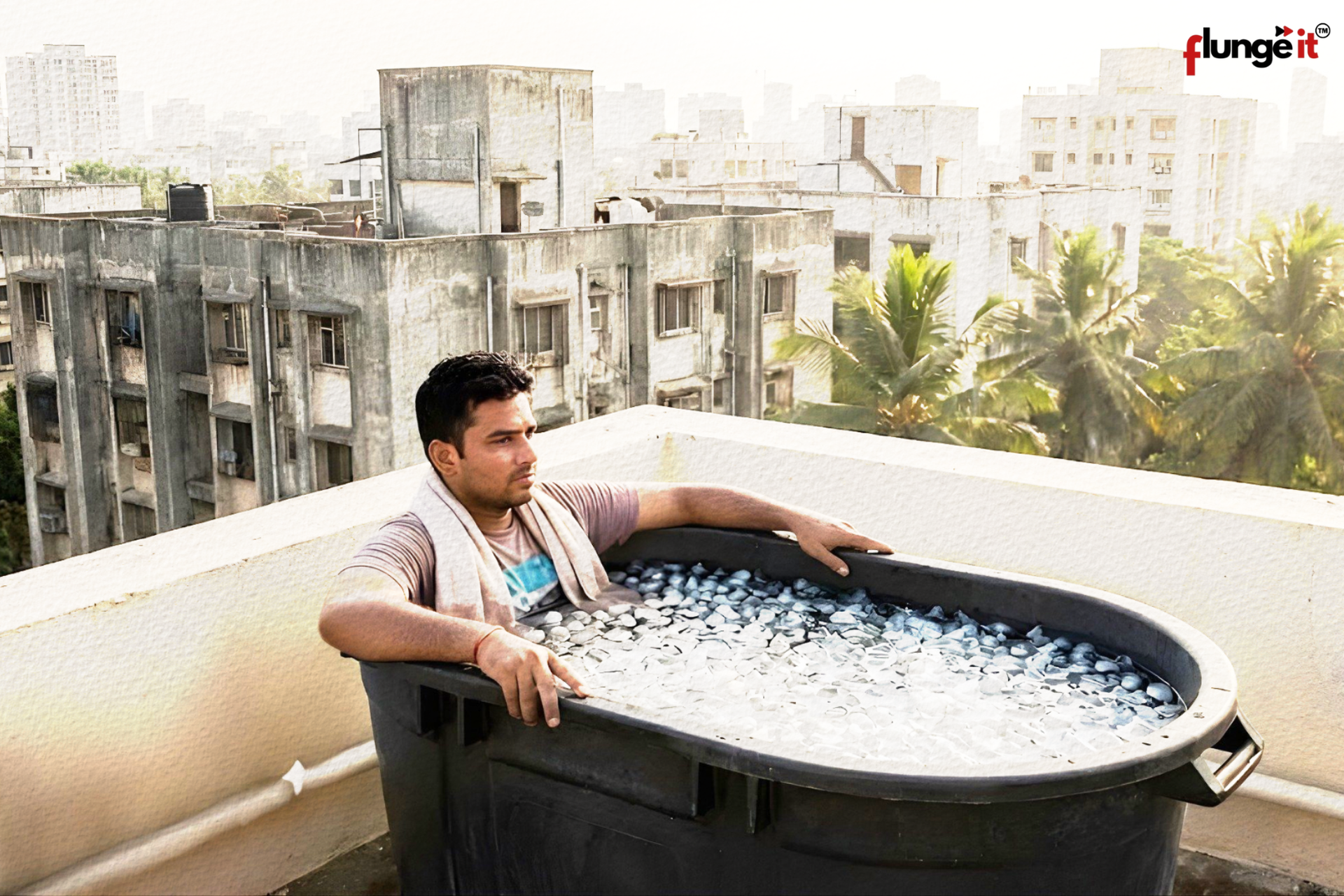
How ice baths fit India’s climate
Cold-water immersion involves sitting in water cooled typically to around 10–15°C for about 10–15 minutes, enough to meaningfully reduce tissue temperature without being extreme or unsafe for most healthy people. Research shows that immersions in roughly this temperature and duration window can significantly reduce delayed-onset muscle soreness (DOMS) and improve neuromuscular recovery after intense exercise.
In India’s hot, humid conditions, this cooling effect does more than just soothe sore muscles:
- It rapidly brings down skin and superficial muscle temperature after outdoor or high-intensity indoor training, counteracting accumulated heat load.
- By promoting vasoconstriction during the plunge and reactive vasodilation afterward, it helps shift fluid, reduce swelling, and support circulation after hard sessions.
Instead of relying only on fans and air conditioning—both of which mainly cool air rather than deep tissues—ice baths offer a direct physiological “reset” from the heat that many Indian cities now experience for most of the year.
Brief benefits, bigger picture
Scientific reviews and clinical observations consistently report that cold-water immersion can:
- Reduce muscle soreness in the 24–72 hours after intense exercise.
- Speed up perceived recovery and reduce fatigue, helping athletes return to training sooner.
- Temporarily dampen inflammation and edema in overworked muscles and joints.
These benefits are not limited to professional athletes; they are also seen in regular exercisers, recreational runners, and fitness enthusiasts who load their muscles heavily on weekends or around events. In India, where many people combine demanding jobs, long commutes, and evening training in already hot environments, this faster recovery window can be the difference between consistent training and recurring burnout.
Changing recovery culture in Indian sport and fitness
Over the past few years, India has seen visible signs that structured recovery is becoming part of sport and fitness culture, not an afterthought. Professional clubs, including football teams in the Indian Super League, have partnered with portable ice bath providers and installed cold-plunge setups at training facilities to support rapid turnaround between matches and sessions.
At the same time:
- Physiotherapy and sports rehab centers in cities like Mumbai, Bengaluru and Gurgaon now list ice bath or cold-immersion sessions as part of their service menus for athletes and serious fitness users.
- Wellness and spa facilities are starting to pair hot-cold contrast therapy with sauna and steam, positioning recovery as a lifestyle offering for urban professionals, not just sports specialists.
This shift mirrors global trends where “recovery suites” with cold plunges and related tools are among the fastest-growing amenities in high-end gyms, indicating that people now see structured recovery as integral to long-term performance and health.
Working with Indian dynamics, not against them
For India, the future of ice baths is less about copying western routines and more about adjusting protocols to local realities—climate, infrastructure, and training patterns. In very hot regions where ambient temperatures stay high even at night, shorter but more frequent immersions after key sessions may be more practical than occasional long plunges, especially when people are already exposed to significant heat stress during the day.
Several dynamics make ice baths particularly suited to Indian conditions:
- Heat and humidity management: In warm-humid zones, active cooling becomes as important as hydration for preventing cumulative heat strain over a training week.
- Urban lifestyles: With limited time for long cool-downs, a focused 10–15 minute cold plunge can slot easily between work and evening commitments while still delivering a noticeable recovery effect.
- Portable setups: The rise of portable, insulated tubs allows use in small apartments, gyms with limited space, and temporary event venues, which matches India’s dense urban and event-driven fitness culture.
There is also a mental dimension that resonates strongly with India’s evolving wellness narrative: cold exposure demands presence, breath control, and discipline, which aligns naturally with traditions of yoga and meditative practice while bringing a modern, performance-focused twist.
As India faces longer hot seasons, higher nighttime temperatures, and rising humidity in many regions, tools that actively help the body shed heat and bounce back from intense effort will become more valuable across sport, fitness, and everyday life. Within this landscape, ice baths are not just a novelty; they are emerging as a practical, climate-aware recovery strategy tailored to India’s unique demands.